Urodynamics is a set of tests and procedures that measure lower urinary tract function. These tests are prescribed by urologists, gynecologists, or urogynecologists, and the results from the tests allow them to look at how a patient's lower urinary tract is working. The bladder, sphincters, and urethra (all parts of the lower urinary tract) work together to hold and release urine. Most urodynamic tests are concerned with measuring the ability of your bladder to hold and drain urine completely.
Read More
Topics:
Urodynamics Testing,
urodynamics equipment,
urodynamics training
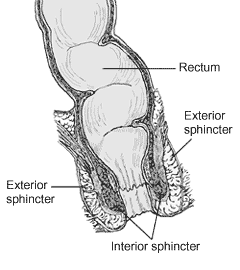
Anorectal manometry is a medical procedure designed to measure whether the muscles—particularly the sphincter muscles—in the anus and rectum are functioning optimally.
Read More
Topics:
anorectal manometry procedure,
anorectal manometry test
What is an Anorectal Manometry Test?
An anorectal manometry test is a diagnostic procedure used to evaluate how well the rectum and anal sphincter work to eliminate stool. The end goal of anorectal manometry is treatment customized to address the specific problem. Treatments may include diet, medications, biofeedback, muscle strengthening exercises, or surgery.
Read More
Topics:
anorectal manometry treatment,
anorectal manometry procedure,
anorectal manometry test
Urodynamics is a panel of tests relating to the lower urinary tract. It is most commonly used in its entirety; however, it is also possible that one or more of the components will be performed separately if symptoms suggest this is necessary.
Urodynamics is the most reliable way to determine the cause of lower urinary tract symptoms and therefore, the best way to determine which treatment methods are most appropriate.
A Care Pathway is an evidenced-based framework to build a treatment plan upon, beginning with the primary physician, continuing to specialist referrals if necessary, and following the patient through to the end of their treatment (including follow-up care).
They typically follow a common path that starts with patient history, followed by clinical assessment, provisional diagnosis, first line management, specialist management, and follow-up care.
Some examples are listed here:
Read More
Topics:
Urodynamics Testing,
General Urology Information,
urodynamics,
urodynamics equipment,
urodynamics staffing,
urinariy incontinence,
urodynamics interpretation,
post-void residual,
stress incontinence,
urodynamics profitability,
urodynamics catheters,
UroGynecology,
Cystometrogram
When it comes to conditions of the lower urinary tract, there are key differences to consider in order to determine which form of testing is the most appropriate. While there are striking similarities between methods that can potentially create confusion upon first glance, a practitioner knows which test is most appropriate for the corresponding symptoms.
One area that has the potential to create this confusion is determining the difference between the need for the broader Urodynamics testing panel or the Cystometrogram. While these two procedures involve many of the same elements, they are in fact different.
This post will provide a detailed comparison of the two methods and describe how they are similar, but also different. First, a brief explanation of the two methods before we compare:
Read More
Topics:
Urodynamics Testing,
BHN,
outsourcing diagnostics,
urodynamics,
incontinence,
urodynamics service provider,
male urodynamics,
stress incontinence,
Uroflow,
Uroflowmetry,
UroGynecology,
Cystometrogram
Whether you are an administrator, owner, or someone who is involved in some way with the running of a medical practice, you are likely going to already know about both asset-light and asset-heavy medical practice designs.
If you are, however, unfamiliar with these terms, then knowing the difference between them can be extremely helpful in weighing up how to design a medical practice and where capital should be allocated.
An asset-heavy medical practice is one with a large amount of capital invested in equipment, the property and building where the practice is located, employees (with a large number of full-time employees), and essentially owns a wide range of assets that allow it to perform as many functions as possible.
An asset-light medical practice on the other hand is one that owns fewer fixed assets, with a minimized quantity of full-time employees that focuses more on using outsourcing vendors to provide patients with a full range of medical and diagnostic treatments.
Read More
Topics:
Urodynamics Testing,
General Urology Information,
Reimbursments,
Reimbursment Trends,
urodynamics staffing,
hospital operations,
clinical operations,
urodynamics service provider,
ObGyn Practices,
urodynamics profitability,
Medical Practice Operations,
Urology Practice Trends
When it comes to diagnosing patients right the first time, urologists, obstetricians, gynecologists, and healthcare professionals who want to improve the services they offer to patients all need to have access to the right testing options for diagnosing specific issues. The same is true when it comes to monitoring the health of the lower urinary system, with urodynamics being the only testing option specifically designed to monitor patient urinary health.
What Is Urodynamics?
Urodynamics refers specifically to the study of how the bladder, urethra, and associated sphincters in the body do their job of storing and releasing urine. Urodynamic testing therefore refers to the set of tests that provide healthcare professionals with valuable information on the health and function of a patient’s urinary system.
Read More
Topics:
Urodynamics Testing,
Reimbursement,
outsourcing diagnostics,
urodynamics,
urodynamics equipment,
urodynamics staffing,
clinical operations,
video urodynamics,
urodynamics interpretation,
urodynamics service provider,
post-void residual,
male urodynamics,
Pediatric Urodynamics,
Uroflowmetry,
urodynamics catheters,
UroGynecology
Providing an effective field service is one of the key responsibilities of medical device companies.
Traditionally, field service agents have been technical support staff with little to no background in medical sciences. Today, however, there is an increasing trend toward incorporating nursing staff, particularly nurse educators, in medical device field service.
Any industry thrives on customer satisfaction, and this applies equally to medical device companies. For medical device companies, customers are typically healthcare professionals who are fully satisfied only when they are able to use a device correctly and to its maximum efficacy, and can summon support to troubleshoot problems as soon as they crop up. Hence, the need for a reliable and readily available field service that can handle problems related to medical devices quickly.
What is expected from a traditional field service?
Field service is required after the sale of medical devices and field staff from the medical device company visit customer premises—usually a hospital or clinic—for this purpose. The general expectations from a field service are:
Read More
Topics:
Medical Practice Operations,
Medical Device Field Service
Field service management is a vital part of any organization's business strategy. No business can enjoy continued success without providing high-quality field service, while a remarkably good field service raises customer satisfaction and brand reputation. Offering a great field service not only removes the risk of tarnishing the brand image that goes along with a poor service, but it also increases customer loyalty and revenue as a consequence.
Read More
Topics:
Medical Device Field Service
Background
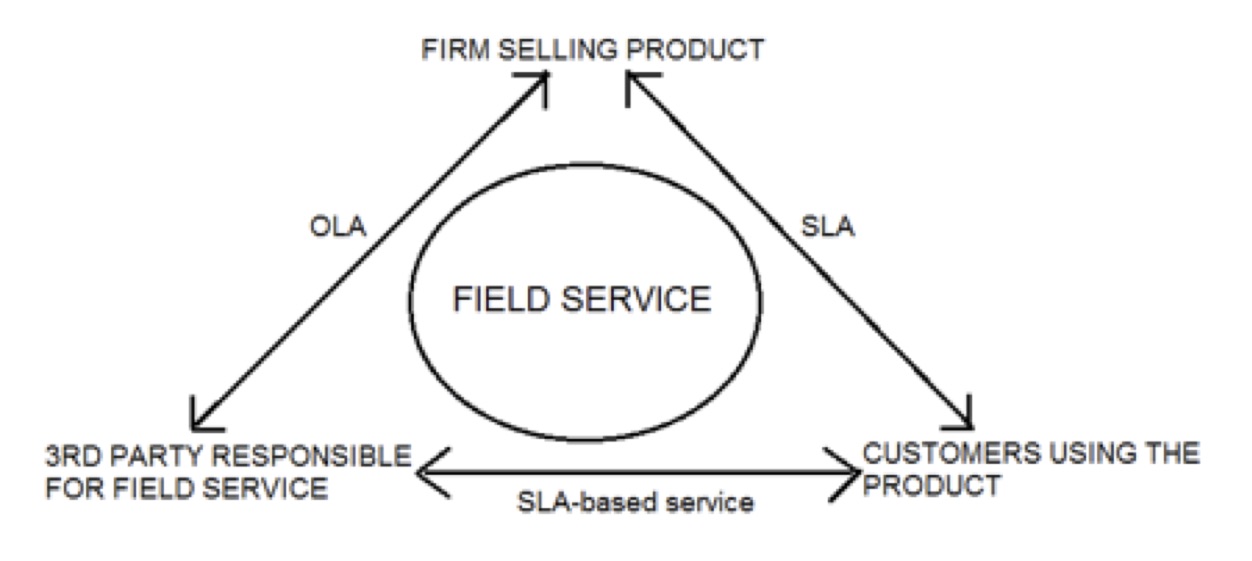
A Medical Device: Field Service - Service Level Agreement (SLA) is a contractual agreement between a field service provider (“Service Provider”) and a Customer (typically a medical device company) that contains the terms and conditions that govern how the Service Provider will perform field service tasks for the Customer; how the parties will communicate with one another; how the parties will modify the agreement over time to fit their ongoing business relationship; how the Customer will pay the Service Provider; and all other details governing the relationship between the parties.
Read More
Topics:
Medical Device Field Service