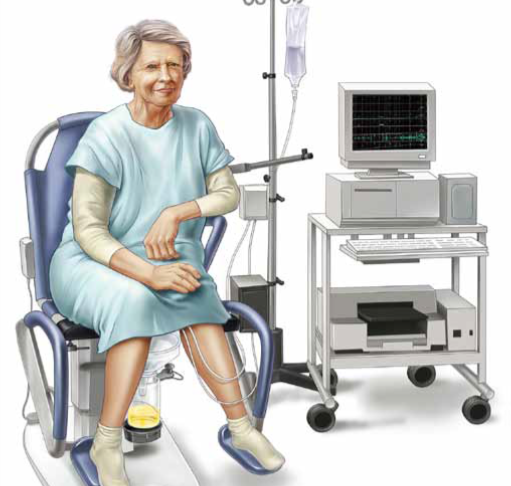
In healthcare, following rote procedures doesn't always cut it. To treat the whole human, you have to account for subjective realities. It's no secret that the way patients experience, perceive, and respond to treatment makes a huge difference in outcomes.
Topics: Urodynamics Testing, urodynamics staffing
The 7 Characteristics That Make for a Great Urodynamics Nurse
Whether you're running a urology practice or trying to become a key player at one, having a good understanding of what makes a great urodynamics nurse is vital. While there are many schools of thought on the characteristics that define good employees in general, this work is highly specialized – So it makes sense that there are a few things most employers can agree on.
Topics: urodynamics staffing, Urodynamics Nurse
Urodynamics is a panel of tests relating to the lower urinary tract. It is most commonly used in its entirety; however, it is also possible that one or more of the components will be performed separately if symptoms suggest this is necessary.
Urodynamics is the most reliable way to determine the cause of lower urinary tract symptoms and therefore, the best way to determine which treatment methods are most appropriate.
A Care Pathway is an evidenced-based framework to build a treatment plan upon, beginning with the primary physician, continuing to specialist referrals if necessary, and following the patient through to the end of their treatment (including follow-up care).
They typically follow a common path that starts with patient history, followed by clinical assessment, provisional diagnosis, first line management, specialist management, and follow-up care.
Some examples are listed here:
Topics: Urodynamics Testing, General Urology Information, urodynamics, urodynamics equipment, urodynamics staffing, urinariy incontinence, urodynamics interpretation, post-void residual, stress incontinence, urodynamics profitability, urodynamics catheters, UroGynecology, Cystometrogram
Asset-light vs. Asset-heavy Private Medical Practices
Whether you are an administrator, owner, or someone who is involved in some way with the running of a medical practice, you are likely going to already know about both asset-light and asset-heavy medical practice designs.
If you are, however, unfamiliar with these terms, then knowing the difference between them can be extremely helpful in weighing up how to design a medical practice and where capital should be allocated.
An asset-heavy medical practice is one with a large amount of capital invested in equipment, the property and building where the practice is located, employees (with a large number of full-time employees), and essentially owns a wide range of assets that allow it to perform as many functions as possible.
An asset-light medical practice on the other hand is one that owns fewer fixed assets, with a minimized quantity of full-time employees that focuses more on using outsourcing vendors to provide patients with a full range of medical and diagnostic treatments.
Topics: Urodynamics Testing, General Urology Information, Reimbursments, Reimbursment Trends, urodynamics staffing, hospital operations, clinical operations, urodynamics service provider, ObGyn Practices, urodynamics profitability, Medical Practice Operations, Urology Practice Trends
When it comes to diagnosing patients right the first time, urologists, obstetricians, gynecologists, and healthcare professionals who want to improve the services they offer to patients all need to have access to the right testing options for diagnosing specific issues. The same is true when it comes to monitoring the health of the lower urinary system, with urodynamics being the only testing option specifically designed to monitor patient urinary health.
What Is Urodynamics?
Urodynamics refers specifically to the study of how the bladder, urethra, and associated sphincters in the body do their job of storing and releasing urine. Urodynamic testing therefore refers to the set of tests that provide healthcare professionals with valuable information on the health and function of a patient’s urinary system.
Topics: Urodynamics Testing, Reimbursement, outsourcing diagnostics, urodynamics, urodynamics equipment, urodynamics staffing, clinical operations, video urodynamics, urodynamics interpretation, urodynamics service provider, post-void residual, male urodynamics, Pediatric Urodynamics, Uroflowmetry, urodynamics catheters, UroGynecology
Urodynamic services provide valuable information when it comes to the urinary health of patients due to their interaction with medications, drugs, and other substances. However, some clinics doubt that urodynamic services make a difference in specific populations of people. To test this theory Suskind AM, Cox L, and Clemens JQ et al. (2017) decided to test the value of urodynamic services within an academic specialty referral practice. The objective of the study was to demonstrate that UDS services could provide useful information for correct medication doses in patients and other drugs.
Patients & Pre-screening
The perspective questionnaire was designed to determine the use of UDS in clinical practices. Each patient who was invited to be in the study was 18 years or older and were either male or female. Five clinics asked their patients if they wanted to participate in the study if they were coming for a UDS service. They were then prompted with a pre-questionnaire asking their race, gender, age, and if they had previously used UDS services. They were also asked if they had any history of pelvic radiation and neurological conditions.
Topics: urodynamics, urodynamics staffing